

When I Opened the Box
What happened at the end of ACORN

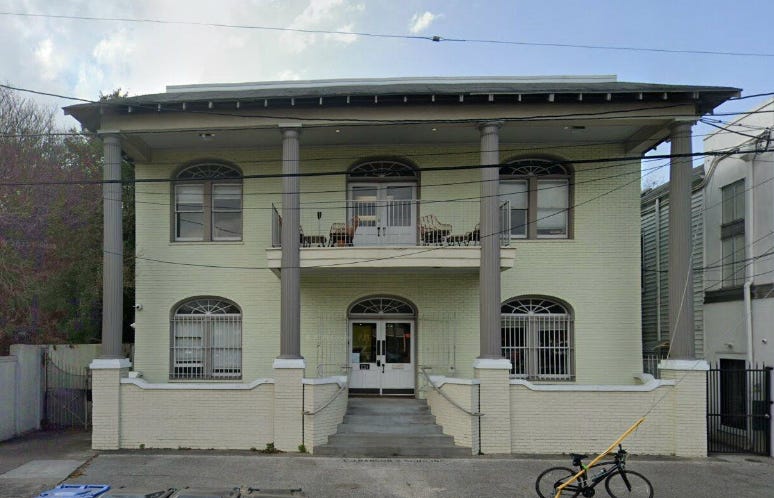
Many days in New Orleans, I pass the old ACORN office. It’s still there, in its quiet, almost majestic stubbornness. And it makes me incredibly sad.
That building was alive. Phones ringing. People walking in off the street for a housing counseling appointment. Organizers coming back sweaty from doorknocking, dumping clipboards and petitions onto desks already buried in paper. Boxes everywhere—old campaigns, old fights, old victories.
Please consider supporting me with a premium subscription. Help me grow the reach and impact of this work.
ACORN wasn’t a theory. It was a machine for turning frustration into action. You’d take people who had never gone to a meeting, never called a city council office, never thought they could matter, and within weeks they were leading actions, negotiating with landlords, testifying at hearings. It changed people. It changed me.
Organizing is strange that way. You watch someone go from quiet to loud, from scared to dangerous—in the best possible sense. In way your are a social martial artist.
Around 2007 a decision was made to move us into a corporate building on Canal Street. Elevators. Big Wooden Doors. The old office on Elysian Fields had felt like a community space. This place felt like we were trying on a fancy suit.
I was moving boxes—years of campaigns, files, grant drafts, internal memos nobody had looked at in years, archaeological layers of organizing.
And in one box, I found a document I wasn’t supposed to see.
I remember the sensation clearly. It wasn’t rage. It was a kind of internal drop, like when an elevator lurches. I realized, in that moment, that a lot of what I had been told wasn’t true.
My upbringing was blunt on this point. My father taught me that stealing is wrong. Cover-ups are wrong. I was taught Richard Nixon was terrible. You do the right thing even when it costs you. My dad didn’t lecture. He modeled it. Quietly. Relentlessly.
So I confronted the founder. I told him he needed to step aside.
The weakness was a founder who couldn’t let the organization outgrow him.
The result was just short of war. Not slow. Not polite. It ripped through the organization. People took sides. Internal fights escalated. Systems locked up. The institution bent inward instead of outward.
I never wanted to treat anyone as an enemy. It felt like a family having a fallout—people who had built something together were suddenly unable to stay in the same room without tension.
Before I even confronted him, I could feel the shift. Others in the organization were demanding changes, but I was isolated from them as well because I worked directly for the founder at that point; they weren’t sure if they could trust me. It felt very lonely.
The founder moved me into a windowless office in that Canal Street building—isolated, fluorescent-lit, like the guy in Office Space. It was clear I had made myself irrelevant to the structure I had helped build.
I felt sad and dreaded going to work each day.
Like any big organization, ACORN had problems it was trying to fix while still doing the work. The organization made some remarkable progress on issues while allowing others to grow up around it. And the organization was large and effective, registering voters in many competitive states, winning increases in the minimum wage, forcing the banks to stop redlining, and changing the discussion in America. That made us a target.
There was also the very real issue that technology was beginning to change organizing. And we weren’t prepared for that, not in the form we were in. We were stuck in our old ways and models. Our culture didn’t allow for the type of changes we needed.
Nonetheless, we were mid-repair and in distress when everything blew up.
The angel of death appeared. A newly minted and privately funded media assassin and an intern he convinced to dress as a bizarre, trashy ass prostitute and deceive people who didn’t judge other humans in distress.
He walked into offices full of regular people—housing counselors, organizers, caseworkers—people whose job was literally to sit with families and try to keep them housed. These weren’t political operators. These were helpers. They trusted people by default, because that was the job.
Who the fuck sends a fake prostitute into a community office to trick people trying to keep families housed?
He staged a situation designed to confuse, embarrass, and trap people whose instinct was to help, not judge. He weaponized their humanity, their training (which did not anticipate this), their decency. Then he edited it, packaged it, and sold it as a morality play.
He turned it into content.
And the country ate it.
Overnight, something surreal happened. Hundreds of blogs appeared. Literally overnight. Coordinated. Scripted. A disinformation swarm before we even had language for that. Now I realize it was real information warfare being deployed by private actors.
People who had never knocked on a door in their lives suddenly had strong negative opinions about people who spent their days helping tenants fight slumlords and families avoid foreclosure.
We had no infrastructure to defend ourselves in that world. We were built for door knocks, meetings, campaigns, and petitions. We were not built for coordinated digital humiliation warfare and an asymmetric internet culture attack.
Fox News convicted us in prime time. My parents called asking if I was okay. Friends saw their life’s work reduced to a punchline. Some of the most decent people I know were publicly defamed for clicks and money. I wasn’t sure I would ever have a career again.
And yet, the thing that stays with me isn’t the attacks on ACORN.
It’s the organization.
ACORN wasn’t fundamentally broken. It had structural flaws. Founderitis mattered. Power structure mattered. Representation mattered. But the people—the staff, the members, the leaders at the ground level—were good enough, smart and committed and decent people. The lies about ACORN were not true.
These days, some politicians survive couch fucking memes. There was no surviving the cultural space we were relegated into at that time, the type of attack was too new, fake as it was.
ACORN didn’t vanish. It splintered. It seeded dozens of organizations, leaders, campaigns, people who went on to build other things. Death isn’t always bad. But the discipline, the national unity, the coordinated force—that disappeared. A national organizing machine died.
And when we were finally relevant enough to matter, we were targeted and destroyed.
I carried anger for a long time. I regret some of how I carried myself. I was burned out, OCD flaring, adrenaline running on empty. I wasn’t my best self. I never treated anyone as an enemy, but I was less than good in moments. And I regret that, and I have tried to change my way of being since then. I’ve tried to reconnect to some people now. I’ve forgiven everyone and myself.
What I learned is that I never really stopped organizing. Every project I’ve built since—gyms, tech companies, art spaces—has been about building some form of community. I still think the line between business and community is artificial. The best businesses are communities. The best communities are systems of production.
What I keep circling back to now is something simpler than politics or ideology: people need the means to live and build with as little friction as possible. The tools, the infrastructure, the basic platforms that let regular people create value, organize, learn, and collaborate without begging permission from institutions that don’t know them. Call it a universal means of production. Not as a slogan, but as a design problem. If you give people real tools and real dignity, they build things. ACORN taught me that. Right now technology, if used correctly, is just another platform to test that lesson.
That’s something I’ll write more about—how people need the means to live, build, collaborate, and create with as little friction as possible.
But this story is simpler.
I pass that old building.
I think about the people.
I think about the box.
I think about how speaking up felt like lighting a fuse.
And I think about how many good people gave their lives to making this country better.
We didn’t fail because the mission was wrong.
We failed because institutions are fragile, power calcifies, and the internet learned how to humiliate at scale.
And still—I’d do it again.
Because when the whale spits you out, you start building.
If you appreciated the honesty and thought put into this work please support my efforts with a low-cost premium subscription. This helps me invest more in developing great stories and articles to inspire you in these difficult times. Power to the people!
Hey Mitch, I read this with great interest because of my brief but intense time working with you at ACORN in Baltimore. ACORN's later demise was such a sad and infuriating betrayal by professional liars. We organizers were more trusting then, especially (as you noted) the caring people on the front lines at ACORN who just wanted to help people. Now, regrettably, we all have to sift and analyze nearly everything because the liars have multiplied. I'm glad you've found other ways to build and organize, and to find peace in the process.
Fascinating. Seriously, that line about ACORN being a machine for turning frustration into action realy hit home. What if more places today had that raw, grassroots energy, you know? Not just virtual spaces, but those tangible hubs that genuinely change people, like that old office obviously did.