


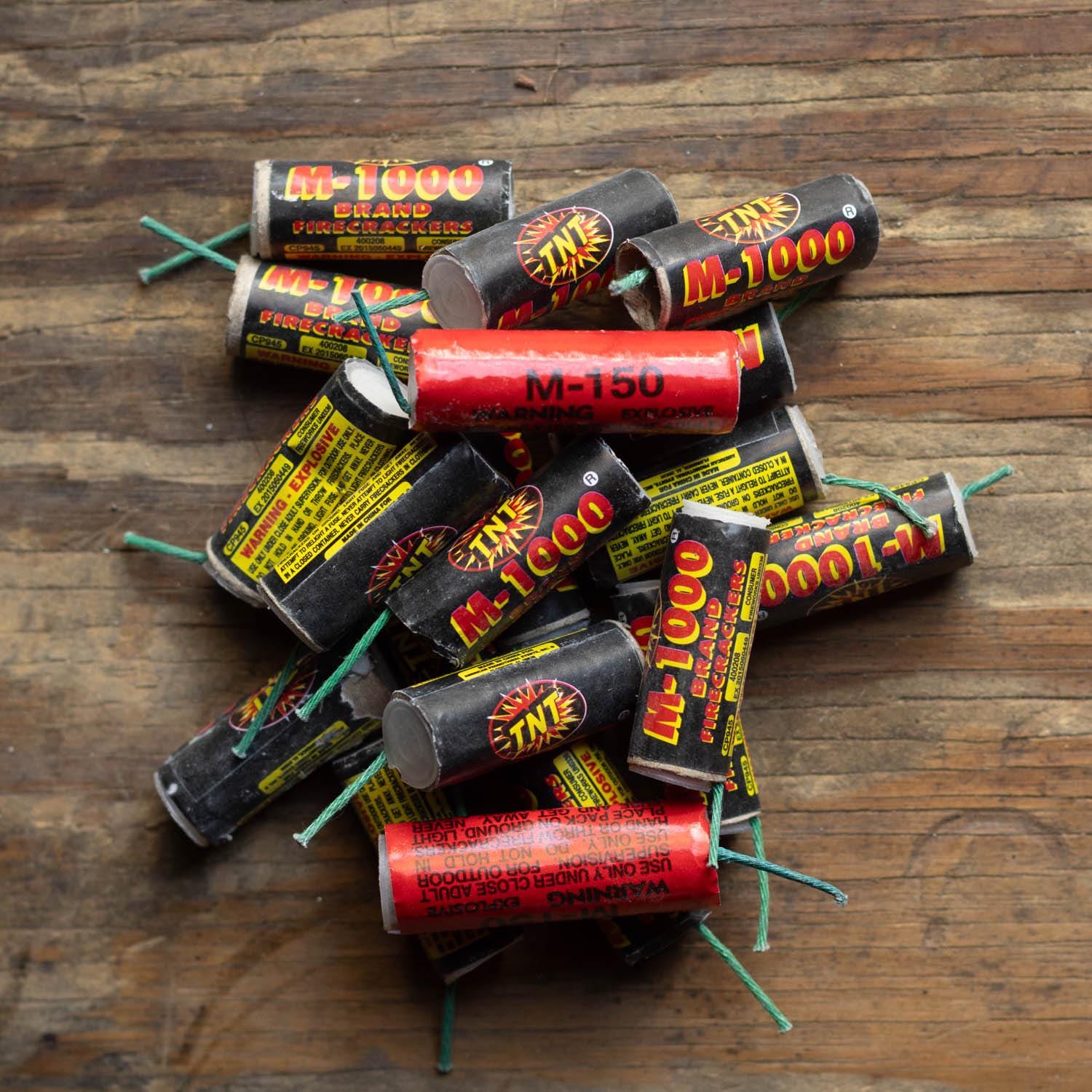
Summertime done, come and gone, my, oh, my.
I'm Uncle Sam, that's who I am; Been hidin' out in a rock and roll band.
Shake the hand that shook the hand of P.T. Barnum and Charlie Chan.
Shine your shoes, light your fuse. Can you use them ol' U.S. Blues?
I'll drink your health, share your wealth, run your life, steal your wife. Wave that flag, wave it wide and high.
—US Blues, Song by Hunter/Garcia and the Grateful Dead
I grew up celebrating the Fourth of July in Los Alamos, and it wasn’t so different from how we do it down here in New Orleans — fireworks, family, somebody’s cousin with a lighter. The one real difference was fire. Up on the mesa, you couldn’t shoot the big rockets, because a single spark in that dry timber could take the whole mountain. When I was a kid, a fire tore through Bandelier, and it was the kind of terrifying that stays with you.
But what I keep coming back to are the coins.
If you were a kid in 1976, you remember them. I got a whole Bicentennial coin set that year — a half dollar with Independence Hall, the quarters with the colonial drummer, dimes and nickels rounding it out, the big pieces stamped 1776–1976. There was a book of commemorative stamps too, and a little flag. School made a point of it: this was historic, the country’s 200th birthday, something you were meant to hold onto. We were two hundred years old, and we made sure the children were holding it in their hands.
I write about power — how it works and what it’s really doing — and I try to explain it plainly. I write about experiences and things other people don’t. If that’s worth something to you, subscribe. Free or paid, it keeps this independent and keeps it coming.
It was a different world. Los Alamos was full of the smartest people in the country, and we still had a rotary phone on the wall. If somebody said they’d call, you waited by the phone — that was the whole arrangement.
We got the news from Walter Cronkite, and so did everyone else. The entire country sat down at the same hour and got the same facts from a man they all trusted. You could argue about what to do about them. You couldn’t have your own private version of what had happened.
My father watched Vietnam on that television and said, every single time, what a horrible thing it was. He’s 87 now and hasn’t changed — every newspaper across the table, three or four books going at once. In our house, paying attention was the whole point.
Here’s what’s actually worth celebrating on the Fourth, and it was never the fireworks. It was the paperwork.
Think how radical it was. A Constitution that said there would be no king, that the man at the top answers to the law like everybody else. A Bill of Rights that spelled out what the government is forbidden to do to you: it can’t hand you a religion, can’t silence a newspaper, can’t jail you without a hearing, can’t decide on its own that you don’t belong. Nobody had ever built a country on that before.
And the best part came afterward. For two hundred years, we kept prying the door wider — to freed slaves, to women, and in living memory to the millions the civil-rights laws finally protected: the Civil Rights Act, the Voting Rights Act, the Fair Housing Act. Before those laws, a Black family could be turned away from a lunch counter, a job, a ballot box, a whole neighborhood, and every bit of it was legal. After them, it wasn’t. That’s not an abstraction; it’s who gets to eat, work, vote, and live where they choose. That same Bicentennial summer, President Ford stood at Monticello — Jefferson’s own house — and swore in a hundred new citizens, calling immigration the thing that made us “a new kind of people.”
That’s the American invention. Not the flag, but the Constitution, and the nerve to keep widening who it covered.
And here’s how you know it worked.
In 1976, we were only two years off Watergate. A president had broken the law, gotten caught, and been forced out of office, and the whole country was ashamed. That shame was the system doing its job — it meant we still believed no one was above the law.
The same scandal today wouldn’t survive a news cycle. We’ve lived with so much corruption for so long that we’ve stopped flinching. And getting used to it is the most dangerous thing that’s happened to us. Not the crime. The shrug.
In 1976, a president acting like a king was unthinkable — something people would not have tolerated. A king was the whole thing we’d fought a revolution to be rid of. Now we’ve got one trying the crown on.
Our current president governs by decree — 228 executive orders in a single year, more than any president in modern history. He freezes the money Congress voted to spend. He fired the inspectors general, whose only job was to watch him. He shipped hundreds of people to a foreign prison with no hearing, then stalled a court order until a judge held his own government in criminal contempt. He muses about a third term, and says there are “methods.”
And every promise I just praised, he has come for. He stood in front of the Supreme Court and argued that the 14th Amendment doesn’t mean what it plainly says. His Court gutted the Voting Rights Act. He calls the free press the enemy of the people.
But he isn’t winning everything, because the country has been fighting back. The birthright order was struck down, six to three; the tariffs, struck down; the election grab, struck down. His decrees keep bouncing off the courts — judges holding the line, and ordinary people in the streets and the statehouses refusing these fascist ideas. That resistance is the reason the crown still doesn’t fit. And the only ones cheering the robes are the hardcore MAGA faithful, who won’t admit the wreckage he’s causing.
And when he isn’t dismantling the government, he’s decorating it with himself. He’s hung three-story banners of his own face on the Justice Department, on Labor, on the Interior — the first sitting president to drape his portrait across federal buildings. Critics compared them to the pennants Kim Jong Un hangs in Pyongyang, and to the thirty-foot image a Nazi front group unfurled at Madison Square Garden in 1939, and they weren’t reaching. He’s ordered up coins of himself, too — a dollar with his profile and his raised fist, and a gold one stamped $250.
And that’s where it comes back to the coins in my hand in 1976. The presidents on our money — Washington, Jefferson, Lincoln — are there because they’re dead. That isn’t sentiment; it’s the law. We keep the living off the currency on purpose, so no one in the office can start to look like a king. And those men didn’t leave monuments to themselves — Washington’s greatest act was walking away from power. What they left behind wasn’t a face on a wall. It was a Constitution that guarantees your rights and promises you’ll never have a monarch.
The coins I got as a kid carried a colonial drummer and Independence Hall — symbols of a country. This one wants his own face in your pocket while he’s still in the chair. That’s the whole difference, right there in your change.
They’re selling the reversal of all of it as fairness. Colorblind. Merit. Law and order. Who could be against merit? But watch what the words are doing.
“Secure the border” polls beautifully. On the ground, it means mass detention with no hearing, families taken in the dark, citizens and green-card holders swept up for how they look and the language they speak. More than two hundred judges have found the policy likely violates due process. None of it is neutral; it’s aimed. A policy that sounds good and harms people isn’t a mistake — the harm is the design.
Then there’s the military, which is supposed to sit above all of this. A soldier’s oath isn’t sworn to a president, or a party, or a church. It’s sworn to the Constitution.
Pete Hegseth is taking that apart, and he started with race. In his first month, he fired the Chairman of the Joint Chiefs — General C.Q. Brown, the second Black man ever to hold the job — and the first woman to run the Navy, Admiral Lisa Franchetti. No cause, no misconduct. In his own book, he’d branded Franchetti a “DEI hire” and claimed Brown got the job to fill a quota; their offense was who they were. Since then, he’s pulled Black and women officers off promotion lists and called it merit. Across the government, that became the cover story for firing people they didn’t like, and an awful lot of them turned out to be Black, brown, or women. They say “colorblind” out loud while they purge by color.
And he’s turning the armed forces into a church — Christian prayer services in the Pentagon on the clock, preachers who teach that America was meant to be Christian at the podium, the Secretary himself praying to “King Jesus” and cutting the faiths the military recognizes from more than two hundred down to thirty-one. The founders wrote “no religious test” and “no establishment” on purpose, because they’d seen what happens when the sword and the altar get welded together. Hegseth is welding them. It’s the oldest bad idea on earth, wearing an American flag.
So how does a country built to prevent every one of these things end up with all of them at once? Money.
Absolute power corrupts absolutely; the founders knew it, which is why they built the machine to stop it. But the machine runs on influence, and influence stopped being about votes and became about dollars — and there’s far more of it now, in far fewer hands. When I got my quarter, the richest one percent held about a fifth of the country’s wealth. Today, they hold a record 31.7 percent, the most since the Federal Reserve began keeping track, while the bottom half holds two and a half percent of wealth. When money like that wants something, the Constitution starts to look like a suggestion.
Eisenhower saw it coming. In 1961, a Republican general warned us about the military-industrial complex — and you’d only have to add the oil-and-gas complex to bring it up to date. Nobody voted for either. And none of it was an accident. In 1971, a corporate lawyer named Lewis Powell wrote the playbook: organize the money, fund the think tanks, take the courts. Two months later, Nixon put him on the Supreme Court. Fifty years on, that project produced Project 2025 — nine hundred pages on how to take the government apart and hand its powers to one man. The point was never to run the machine the founders built. It’s to dismantle it.
So here we are at 250. At the 200th, we handed the kids a coin, swore in strangers at Jefferson’s house, and called it America. This year, somebody’s trying to take it all back.
I’ll still light the big fireworks tonight, because it’s the Fourth and it’s worth it. But let’s be honest about the year we’re in. The people in charge have been playing with matches for a while now, and the country is on fire — the Constitution defaced, the courts ignored, the military turned into a loyalty cult, the richest handful who ever lived buying the whole thing out from under the rest of us.
And a document can’t defend itself. The Constitution isn’t a person; it’s a promise, and a promise only holds if somebody keeps it. That somebody is us. There’s a fourth branch of government the civics books skip right over, and it’s the citizens — the whole design assumes we show up, and when we don’t, it burns.
Think about what I was handed as a kid. A coin set and a book of stamps. A free public education. A country where equality and equity were things people were proud to believe in, not words to sneer at. None of it was a gift. It was a loan — paid forward by the people who kept the promise before me, on the condition that I keep it too.
So we don’t run from a fire and call it weather. We put it out. That’s the real Fourth of July. Not the fireworks. The fourth branch. Us.
Like I said: I write about power and how it actually works, and I explain it. I write about the experiences and the things other people won’t. If this was worth your time, subscribe — free or paid — and send it to someone who needs it.