

Poor on Purpose
Louisiana finishes last in the things that matter, and it’s a choice. For fifty years both parties served the corporations and left the people at the bottom — and now one party runs that bargain

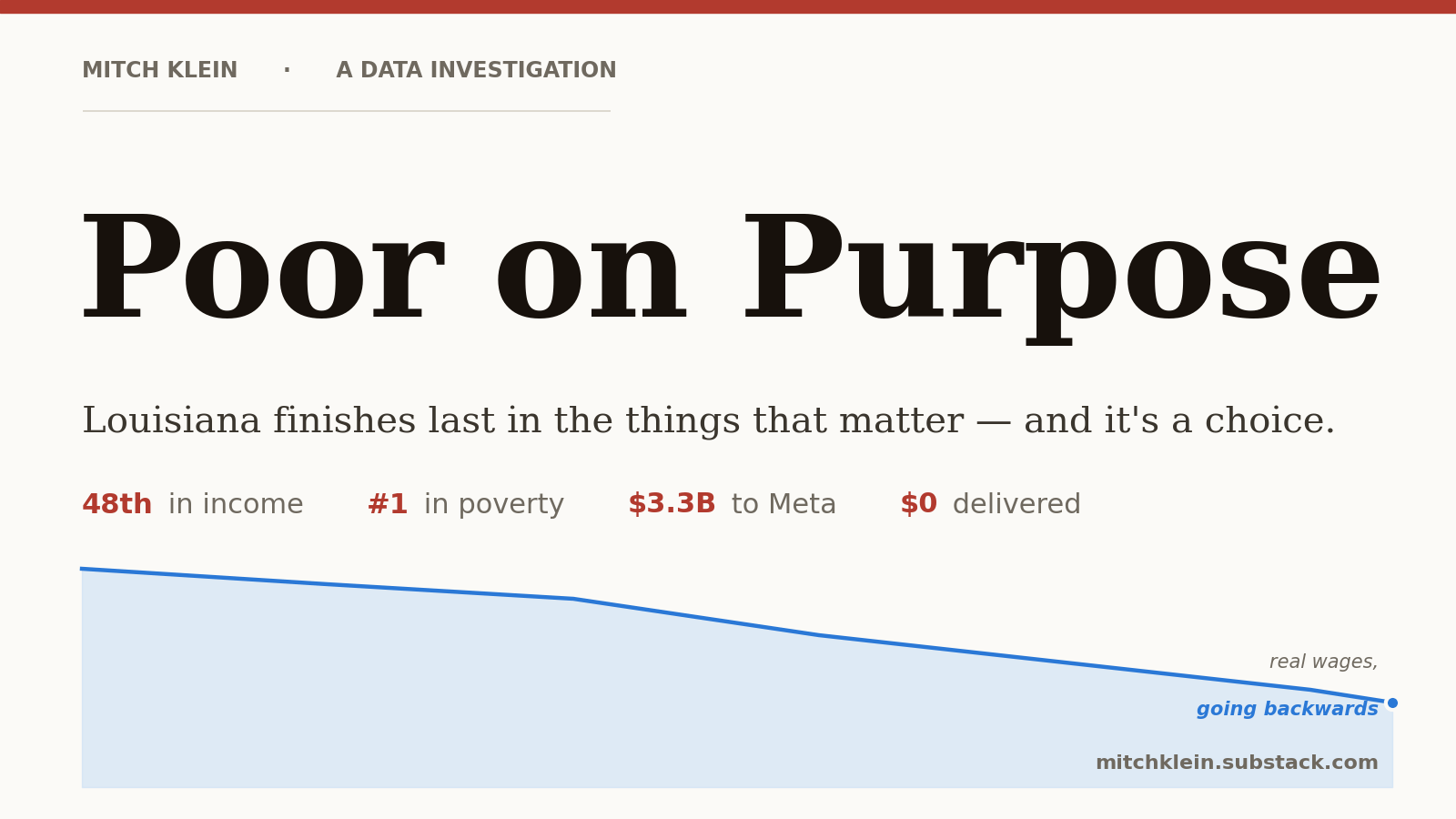
Most people in Louisiana are working harder than their parents did and falling further behind.
That’s not a feeling. It’s in the numbers. And when you lay the numbers out one after another, they stop looking like bad luck and start looking like a decision — a state finishing last, going backwards, and choosing policies that keep it there.
Let the charts tell it.
First, where we start: the bottom.
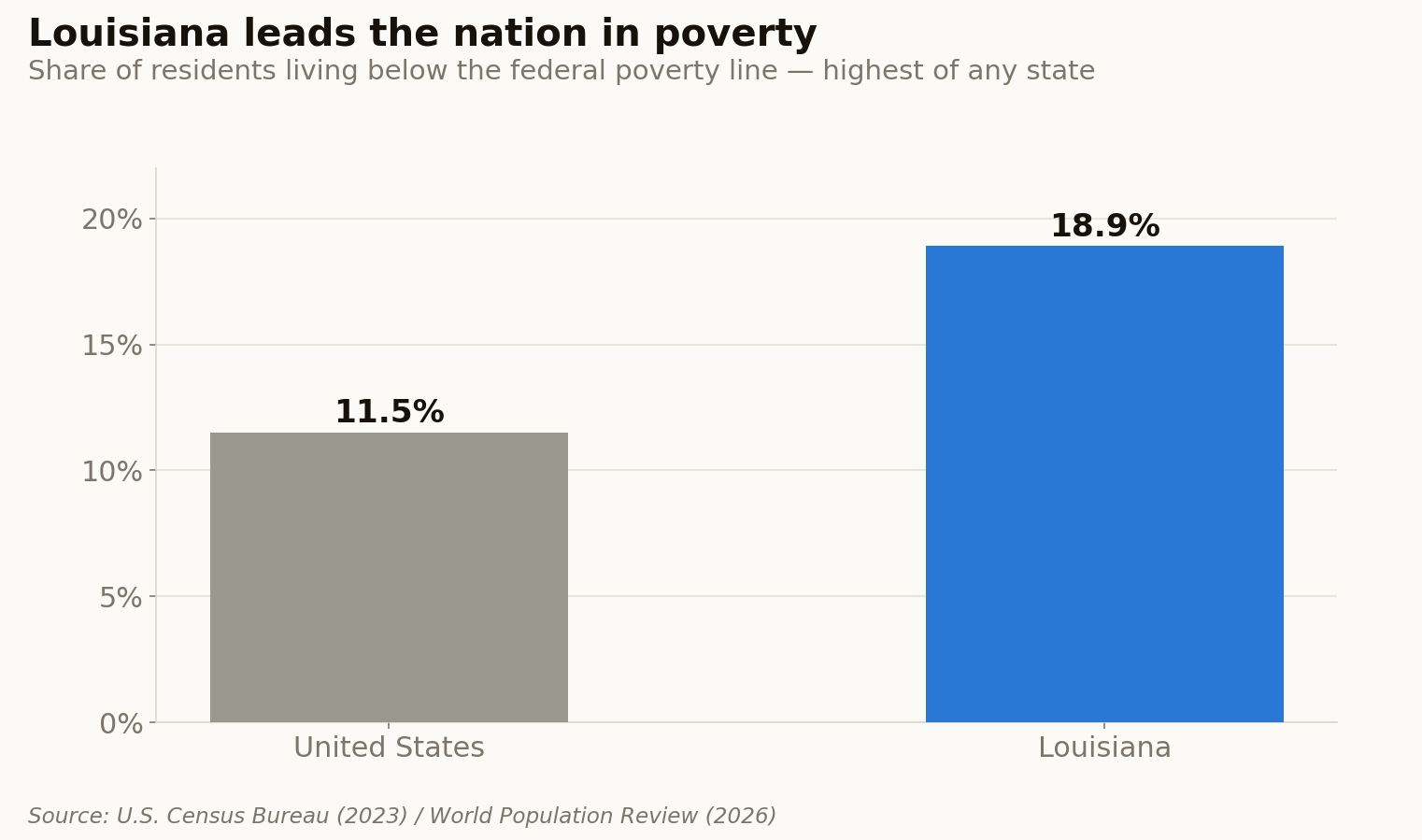
One in five Louisianans lives below the poverty line — the highest rate in America. We’re first in veteran poverty, too: more than one in twelve of the people who served this country and came home here are living in poverty.
And it isn’t just poverty. It’s almost everything.
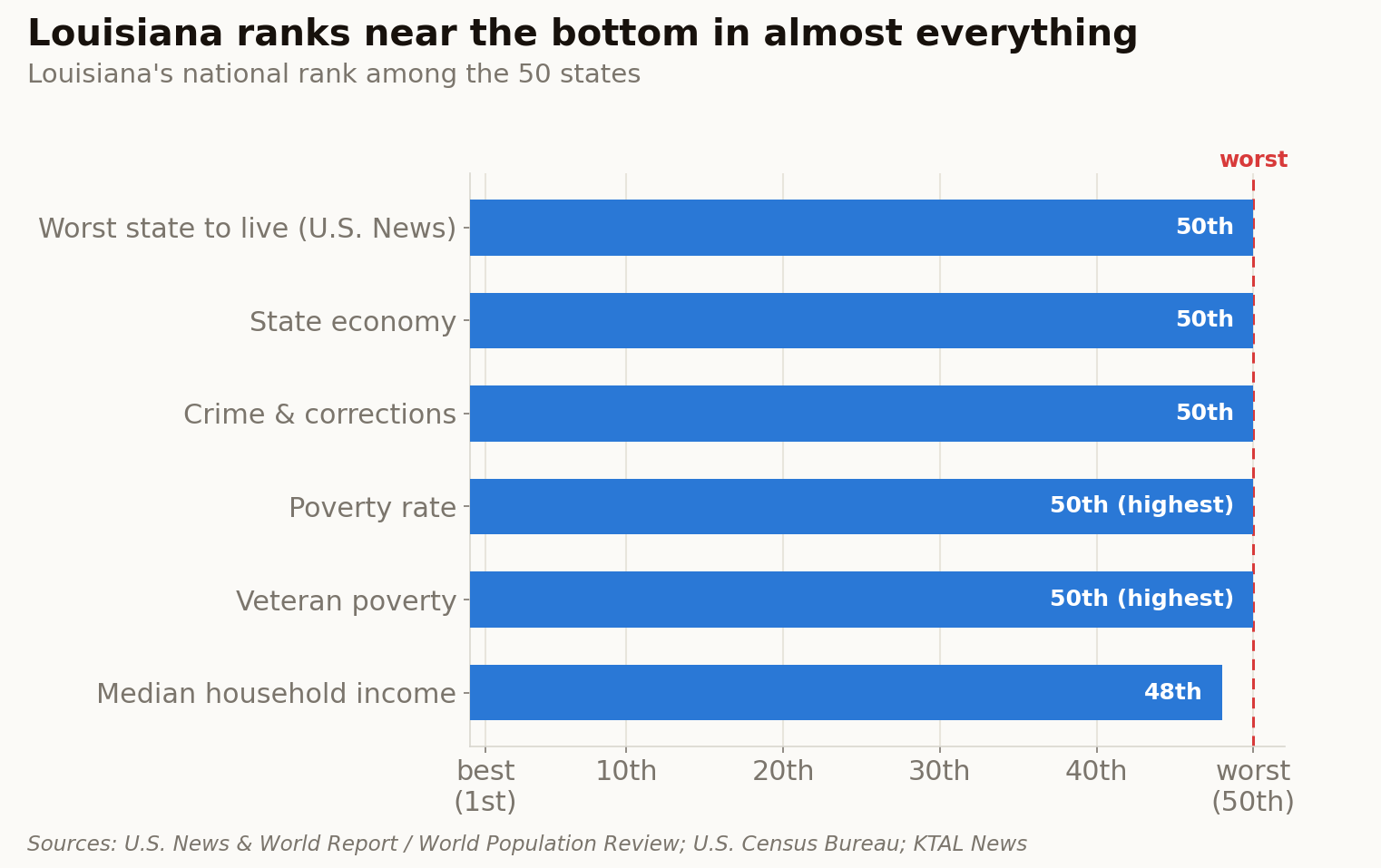
U.S. News has ranked Louisiana the worst state in the country to live in nearly every year since 2017. Worst economy. Worst crime and corrections. 48th in income. This is the ground floor the whole state is standing on.
Second, the direction: backwards.
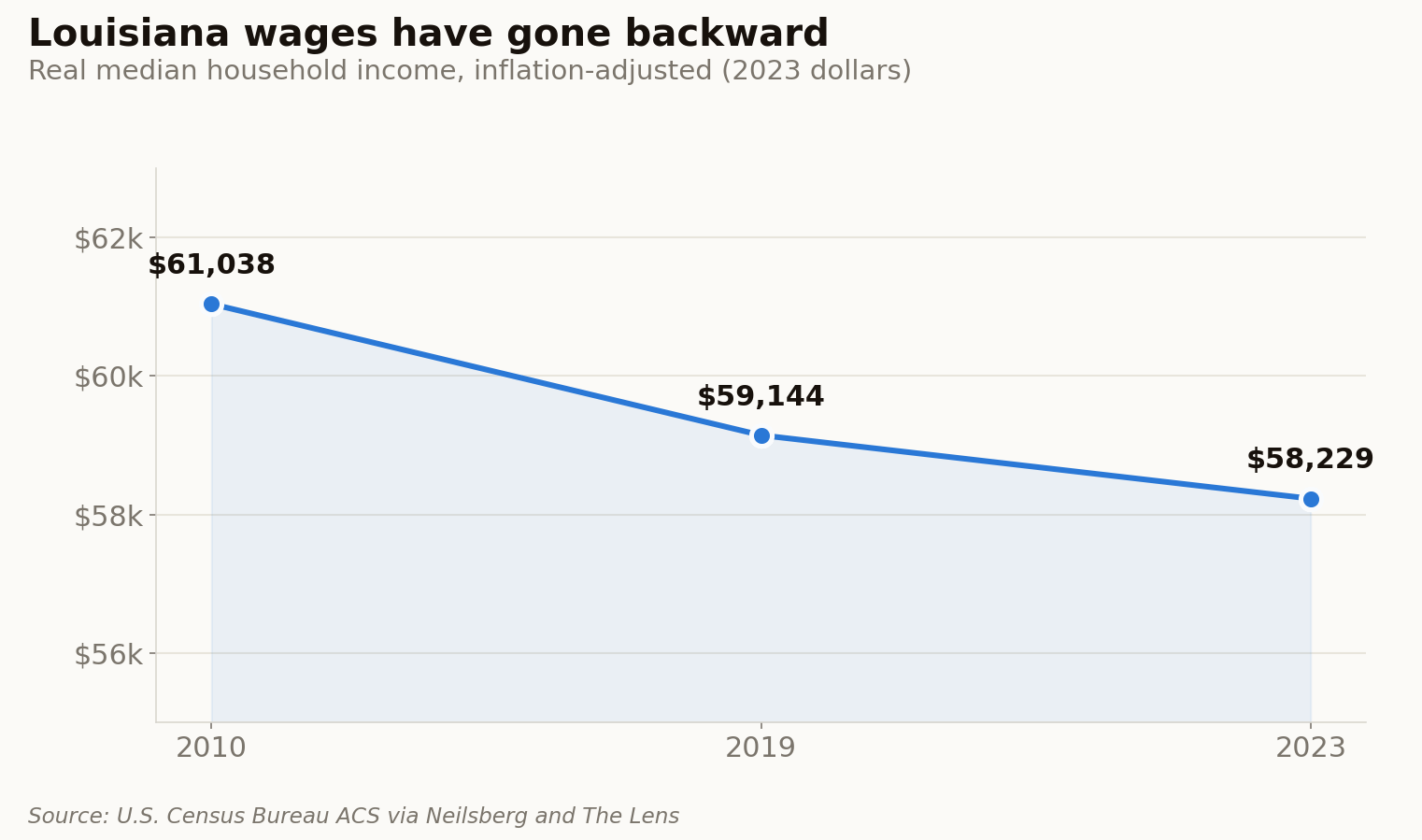
Here’s the part that should stop you. Adjusted for inflation, the typical Louisiana household earns less today than it did in 2010. Not growing slowly. Shrinking.
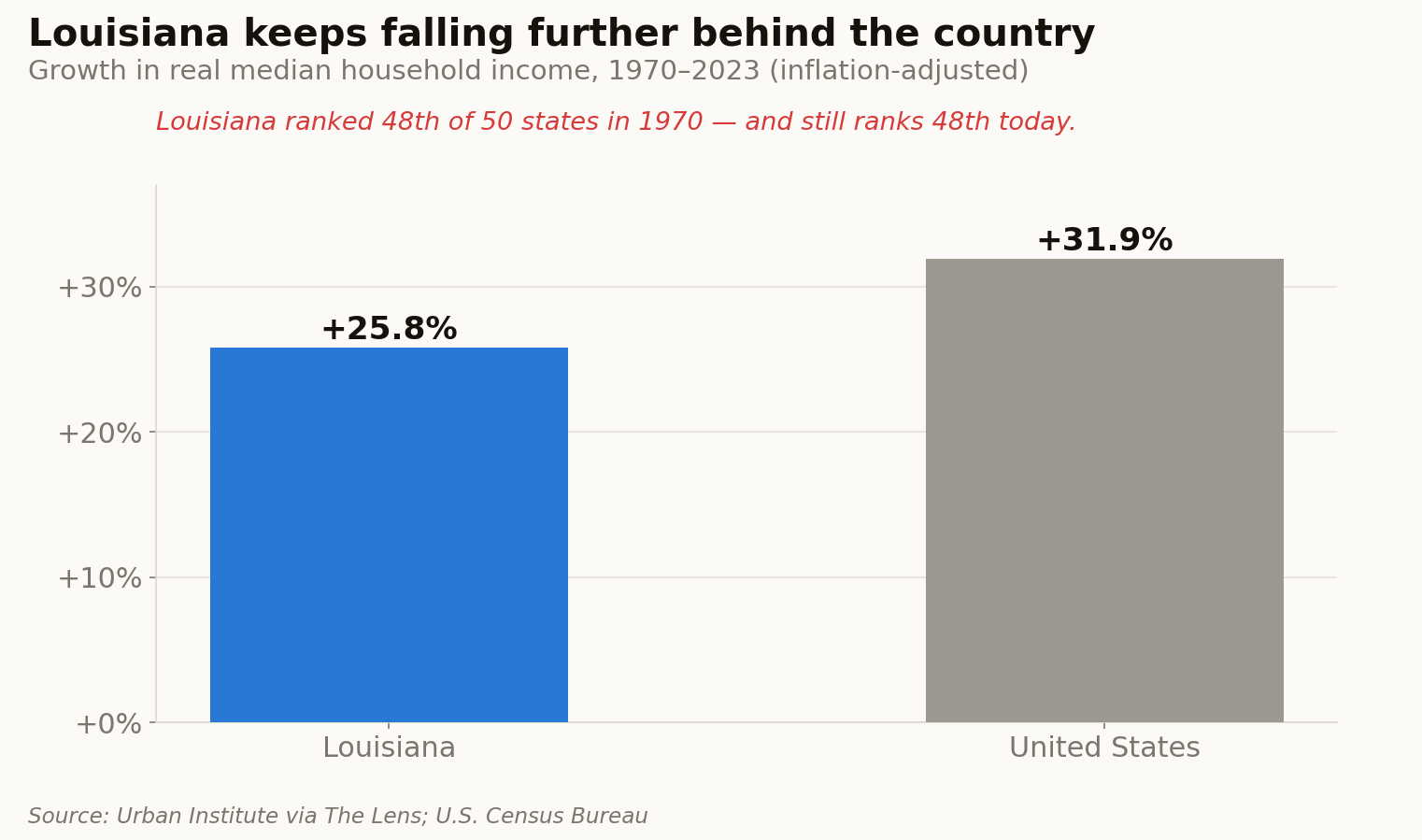
Stretch it across fifty years and the gap only widens. Since 1970, real income here grew slower than the country’s, and Louisiana ranked 48th of 50 states then and ranks 48th now. Half a century, same seat at the bottom.
Meanwhile, the cost of simply living keeps climbing.
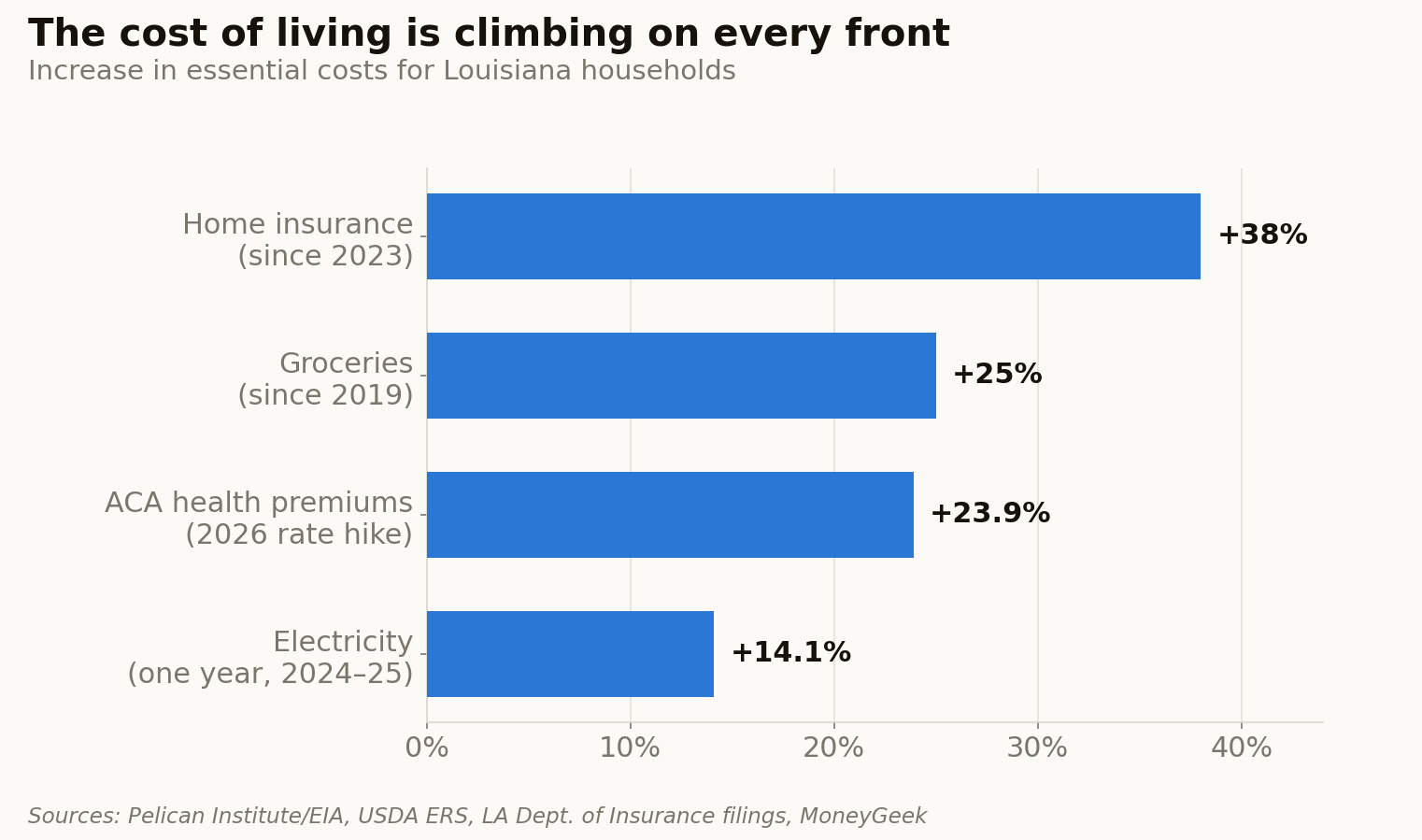
Electricity up 14 percent in a single year. Health premiums up 24 percent. Groceries up 25 percent since 2019, in the state that already spends more of its income on food than any other. Flat wages, rising bills — that’s the squeeze most people here live inside every month.
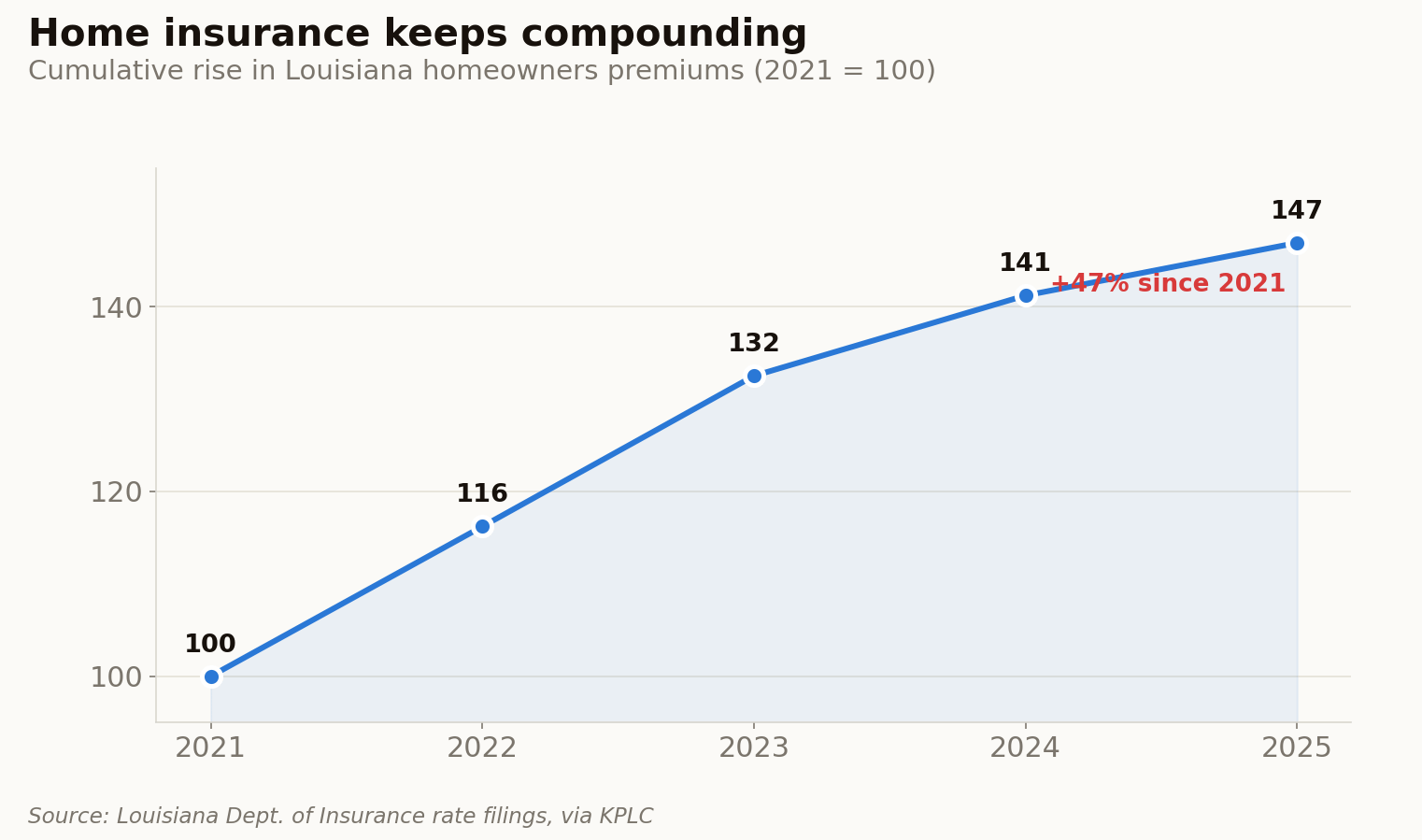
Home insurance is its own crisis. Premiums have compounded nearly 50 percent since 2021, to around $7,300 a year — close to triple the national average. The state’s answer was to make it easier for companies to drop you, the same promise made in 2020 to cut auto rates. Auto rates rose every year since.
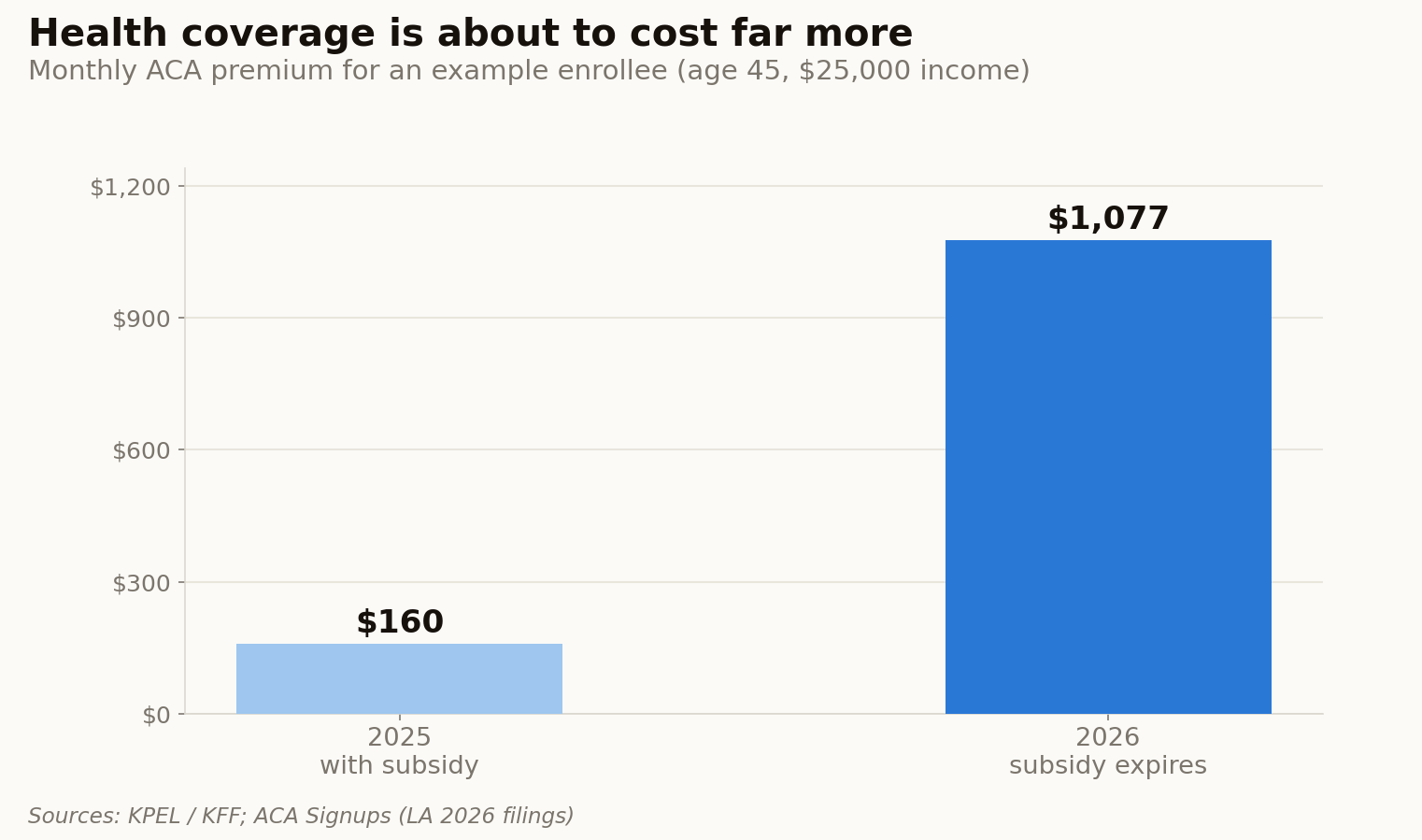
And health coverage is about to get brutal. For a Louisianan making $25,000, the monthly premium can leap from $160 to over a thousand dollars — a rate hike stacked on top of the expiration of federal subsidies. That expiration is a policy choice, made in Washington and cheered on here, in a state where marketplace enrollment has grown 234 percent since 2020.
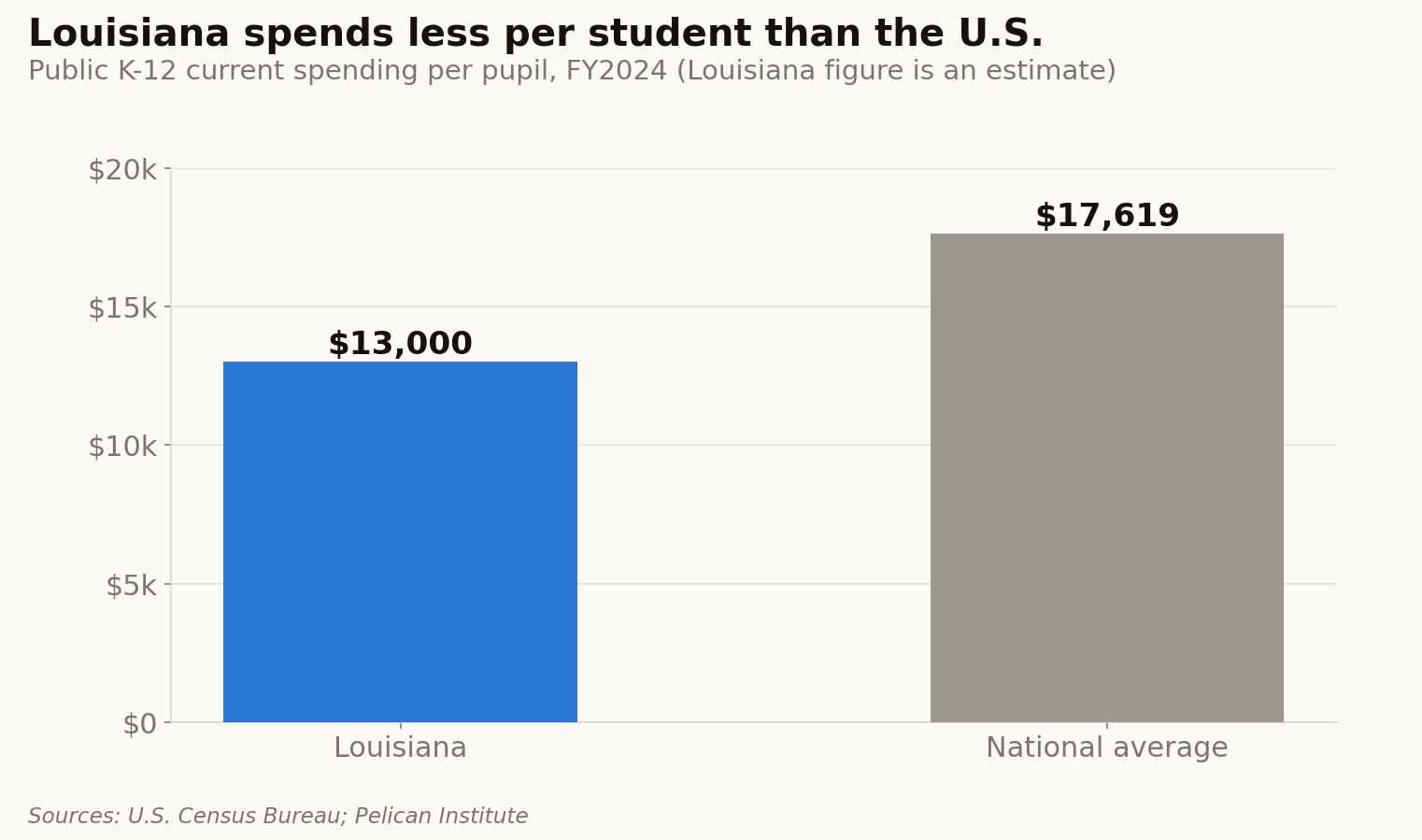
Even the next generation gets shortchanged. Louisiana spends below the national average on each student, then leans on Washington for nearly one in five education dollars — right as the same movement gutting the health subsidies comes for the Department of Education.
Third, the choice: who the money is for.
When a state this poor finally lands a giant investment, you’d think the money would go to the people getting crushed. It didn’t.
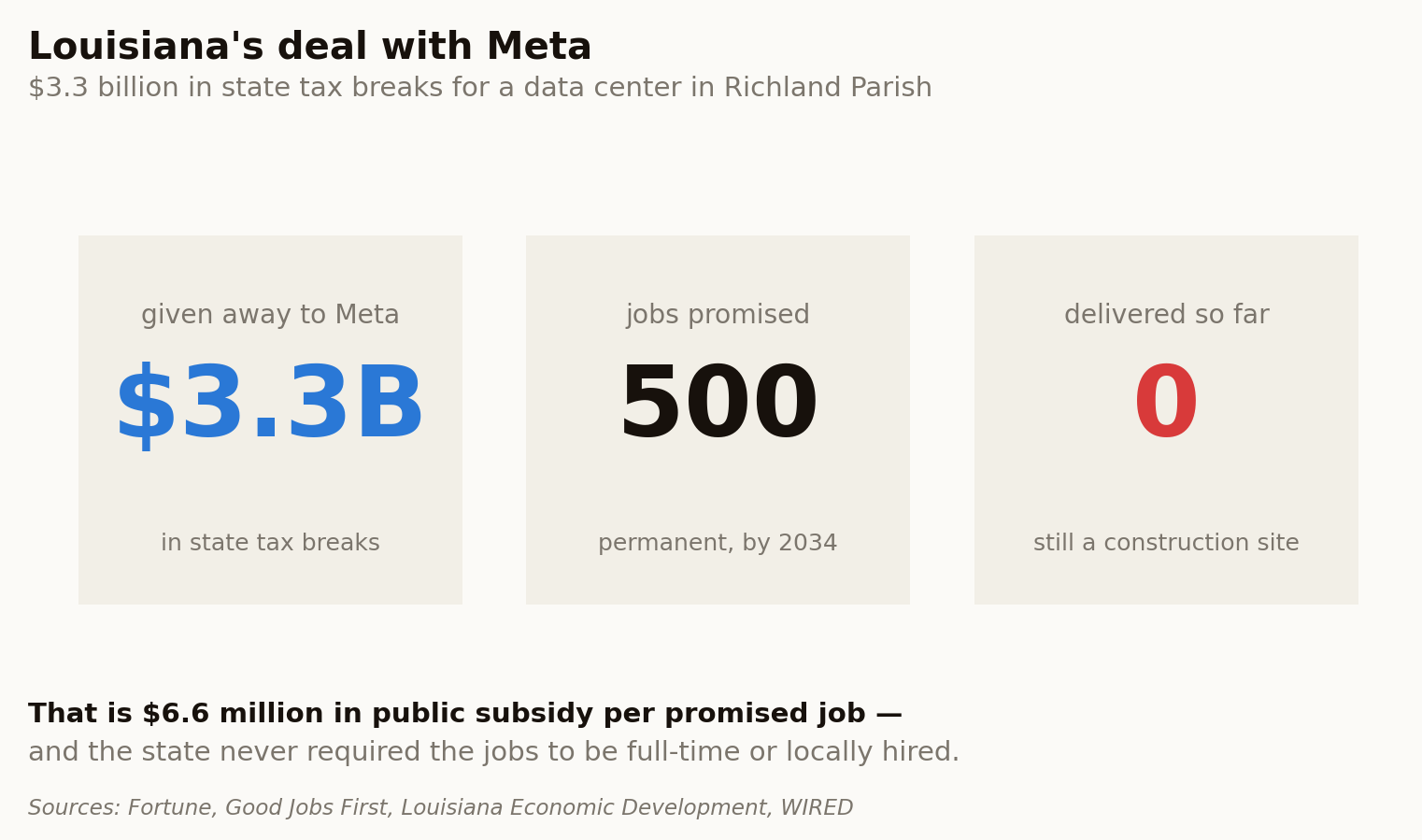
Louisiana handed Meta — a company worth nearly two trillion dollars — $3.3 billion in tax breaks to build a data center. For that, Meta promised 500 jobs. That’s $6.6 million in public subsidy per job. How many exist today? Zero. It’s a construction site; the first hiring deadline isn’t until 2028.
They’ll tell you the break was the price of admission — that Meta never comes without it, so nothing was really lost. The watchdogs who study these deals call that a bluff. In the words of Good Jobs First, these are “wasteful subsidies for an industry that doesn’t need public investments or support.” A trillion-dollar company came here for the cheap gas and the compliant regulators. The tax break was gravy.
And the tax breaks were only half of it. To feed that data center, the state didn’t just spend money — it rewrote the rules.
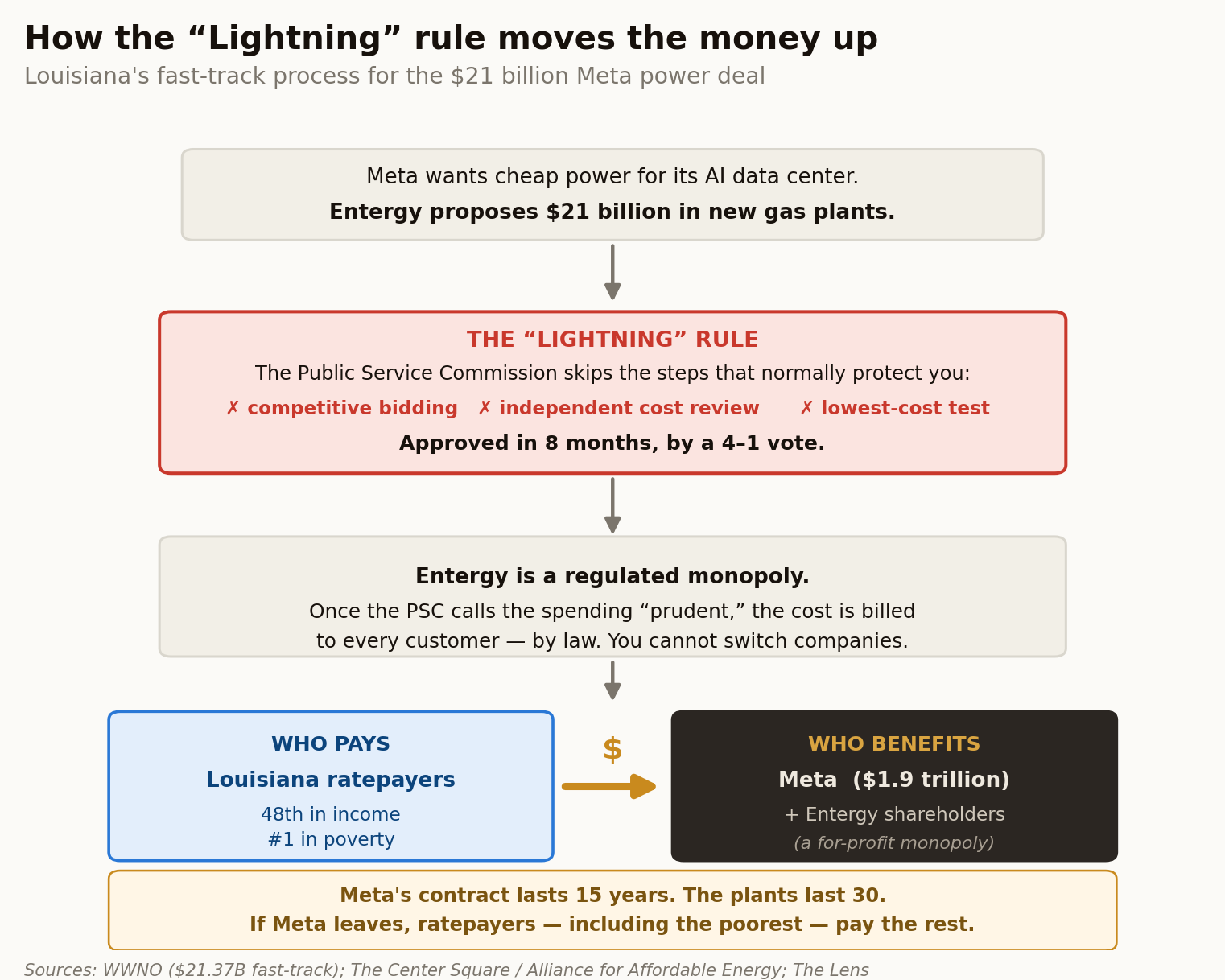
Here’s how the “Lightning” rule works. Powering Meta’s data center takes $21 billion in new gas plants. Normally, before a monopoly like Entergy can put that on your bill, the Public Service Commission makes it prove the plants are the cheapest option — competitive bidding, an independent cost review, real public scrutiny. The Lightning rule waives all of it. The $21 billion package was fast-tracked and approved in eight months, on a 4–1 vote.
Then the monopoly does the rest. Because Entergy is a regulated monopoly, once the Commission blesses the spending as “prudent,” the cost is billed to every customer by law — and you can’t switch companies to escape it. So the tab for Meta’s power lands on ordinary Louisiana households: the state with the 48th-lowest incomes and the highest poverty rate in the country.
That is the transfer, in plain sight. Money flows out of the pockets of people who are already last and into a company worth nearly two trillion dollars — and the shareholders of a for-profit monopoly. The risk runs the same way: Meta’s contract lasts 15 years, but the plants last 30. If Meta walks, the poorest ratepayers in America are left holding what’s left of a $21 billion bill.
And it gets worse where people actually live. New Orleans is broke — staring down a roughly $222 million budget deficit, the kind of hole that furloughs workers and slows every service. That’s the condition the city is already in.
So what did the state do? It reached into a broke city and took more.
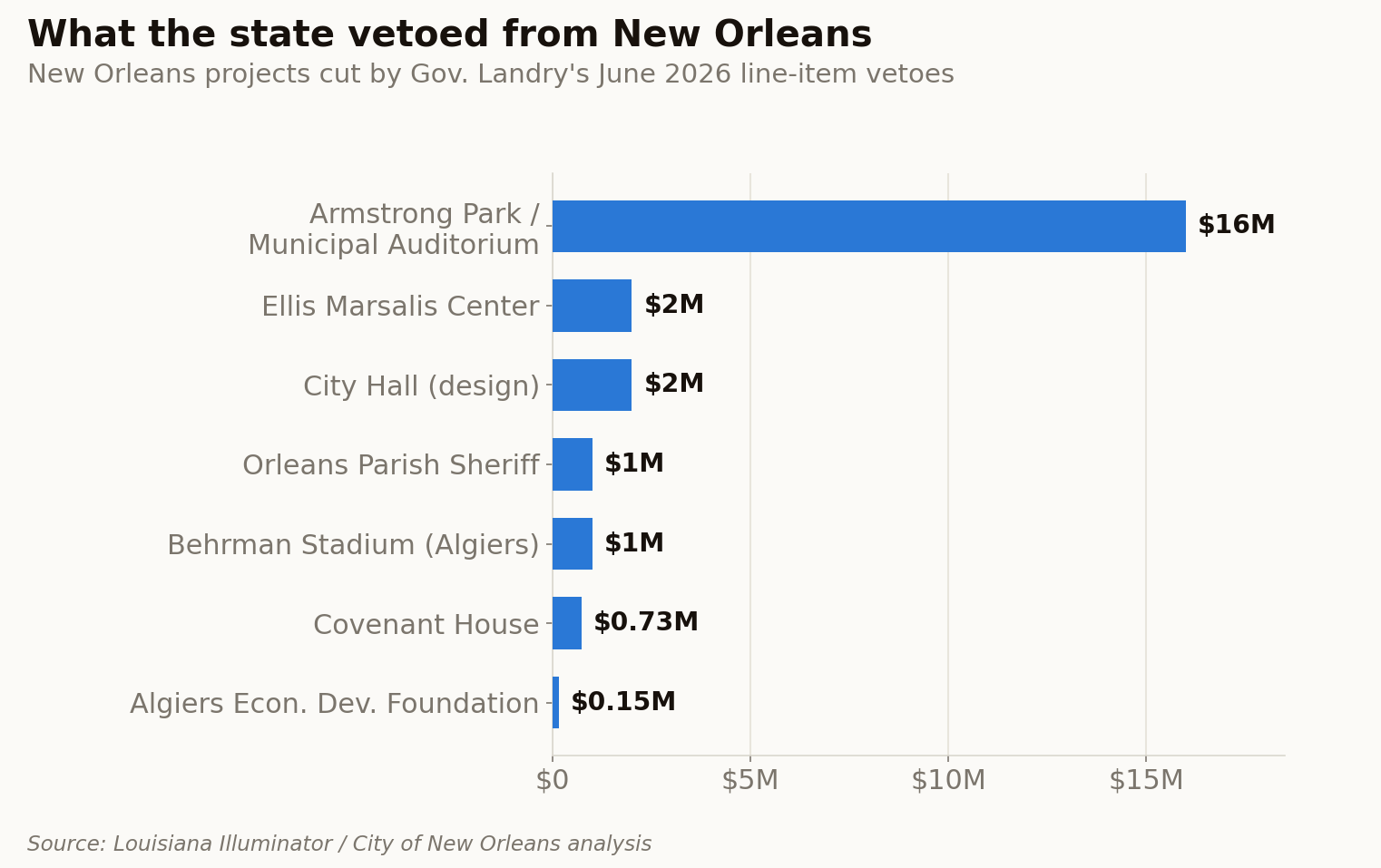
In June, Governor Landry vetoed more than $33 million from New Orleans — over half of every line-item veto in the whole state, aimed at one city. Sixteen million for Armstrong Park, shuttered since Katrina. Money for a music center, a shelter for homeless kids, the sheriff. Then the Legislature gutted the courts and the DA on top of it. You don’t grow a place by starving it. You slow it down, cut the services the growth was supposed to fund, and act surprised when people leave. It’s a spiral. And it is being chosen.
Both parties built this. One runs it now.
None of this is scattered bad luck. It’s a bargain — and it’s older than the current crowd.
Be honest about the timeline, because this is bigger than any one party. Louisiana didn’t land at the bottom overnight. We’ve been last for fifty years, and for most of them this was a Democratic state. Conservative, corporate Democrats ran it, and they served the oil, gas, and petrochemical giants exactly the way today’s Republicans serve Big Tech — with tax exemptions, with a rubber-stamp regulator, with the public’s money. For decades, under governors of both parties, Louisiana handed its property taxes to industry while its schools and hospitals went begging.
The party label changed. The deal didn’t. Corporations first; people last. Meta is only the newest name on a very old contract.
What’s different now is that there’s no one left to say no. Louisiana is a one-party state — Republicans hold the governor’s office, supermajorities in both chambers, and every statewide seat — and they run in lockstep with the MAGA movement in Washington. The corporate bargain used to at least face a fight. Now it governs unopposed, from the statehouse to the Capitol, pushing the same direction and landing on the same people.
Watch how they stack. Washington let the health subsidies die; the state, which could have cushioned the blow, spent the year deregulating insurers and waving through gas plants instead. Washington moves to gut the Department of Education; Louisiana already funds its schools below the national average and leans on those federal dollars for one in five. Washington’s economy hands working people weak job growth and inflation in the price of everything; the state answers by handing $3.3 billion to Meta. Federal cut, state neglect — over and over, the same squeeze from both ends.
And it falls hardest exactly where you’d expect. On the poorest people in the poorest state, the ones already last in income and first in poverty, who feel every rate hike and every lost subsidy first. And in New Orleans — a majority-Black city stripped of $33 million, gutted in the courts, and treated as a political enemy by the state, while Washington cuts those same residents’ health care and their kids’ schools. The city and the poor get it from both the federal and state administrations at once.
That is what a captured government buys you, whichever party holds it: no check, no competition, no reason to serve the people who aren’t writing the checks — so it doesn’t.
If this kind of information matters to you please support my work with a paid subscription. The mainstream media is dying, it doesn’t do the in depth reports and analysis needed to understand power in our changing world please support me.
Sources & notes
Rankings. World Population Review (poverty, 18.9%); KTAL News (No. 1 veteran poverty); World Population Review / U.S. News (worst state, economy, crime).
Wages. Neilsberg, The Lens / Urban Institute, FRED (Census ACS, inflation-adjusted).
Cost of living. Pelican Institute; KPLC / LA Dept. of Insurance and MoneyGeek; ACA Signups; KPEL / USDA ERS.
Education. U.S. Census Bureau, FY2024 school finances; Pelican Institute.
Meta deal. Fortune; Good Jobs First; Invest in Louisiana / WIRED.
New Orleans: broke, then cut. NOLA.com (~$222M deficit); Louisiana Illuminator (line-item vetoes).
Two figures to flag: the $160→$1,077 premium is a specific example household (age 45, earning $25,000), not a statewide average; and Louisiana’s ~$13,000 per-pupil figure is an estimate from FY2024 totals — below the national average, though not the lowest in the country.