

Better Than Almost Everyone (I’ve Been Watching Since 2017)
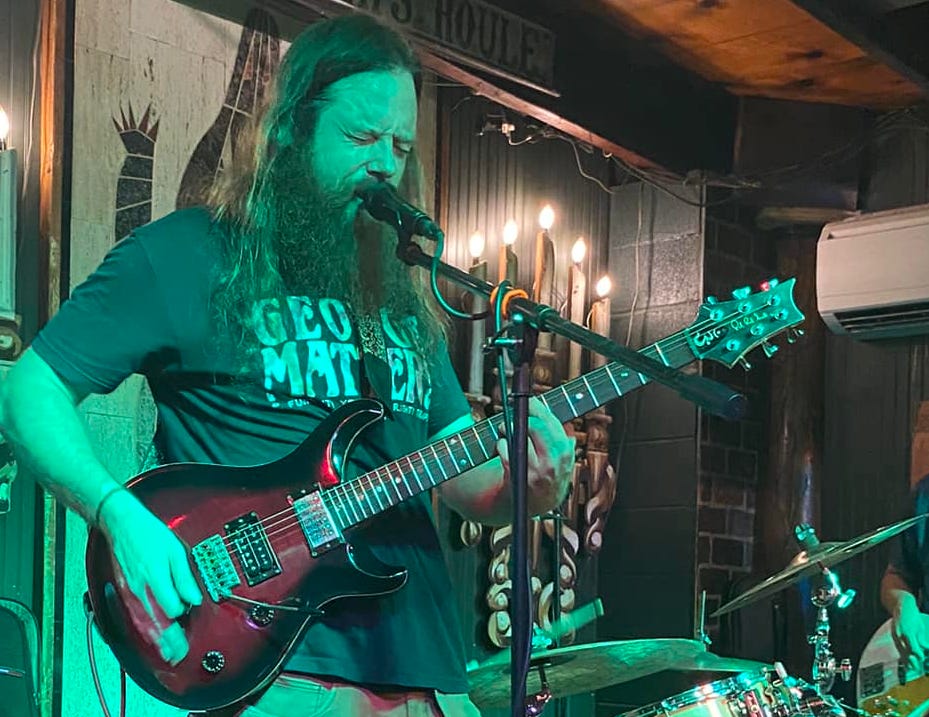
At 32, Robbie Smith is one of New Orleans' greatest artists

It was around mid-2017.
The bar was DMAC’s, sitting in one of those transitional stretches of a city where people pass through more than they stay. When I was working around the corner at Patentdive, the area felt like a corridor—truck traffic, transient street life, old confederate symbols lingering—an odd place to have an office, especially since ours sat behind a big fence in a genuinely incredible building that felt like a different world once you were inside.
Sometimes, when I went to shows there, I got into arguments with idiots who weren’t there for the music at all. The area got under my skin.
And I kept going anyway—because Cardboard Cowboy was playing, and because I needed the music.
I’ve been following this band for almost ten years now. Long enough to know the difference between promise and proof. Long enough to watch something become itself.
I live with OCD. Music isn’t entertainment for me—it’s regulation. It interrupts mental loops. It gives my mind something structured and alive enough to follow without collapsing inward. Live music does that best.
Let’s say this plainly, because the modern attention economy muddies simple truths: this band is polished as fuck. They are better than 99 percent of bands operating anywhere near their genre. Tight. Intentional. Disciplined. They listen to each other. They improvise without losing the plot. They know when to stretch and when to lock in.
This Substack is reader-supported. If you value writing that pays attention to people who do real work over long periods of time, becoming a paid subscriber helps me keep doing it.
At the center is Robbie Smith.
Robbie is self-taught. He started out knowing only the chords in the songs he’d learned—no theory training, no reading music, no tab. What he had was an ear, discipline, and the willingness to work alone until the instrument did what his head heard.
Now he’s an artist and my favorite shredder. He improvises constantly and uses a nuanced whammy bar. But what actually separates him isn’t flash—it’s lift. He makes other musicians better. He elevates parts that already work. He hears things other people don’t and insists they get addressed.
He can be hard to deal with. He’s a perfectionist. Sometimes people get upset. Usually, they understood—because he was serious, and because the seriousness showed up in the results.
When Robbie talks about why he makes music, he doesn’t romanticize it:
“I know that I’ve been at times not suicidal, but comfortable with dying to an unhealthy degree—and one of, if not the only major thing that has saved me from feeling that way is music.”
And he’s just as clear about the deeper aim:
“Art, in general, and its ability to provide meaning where there may already be meaning but you can’t see it—that’s why I do it.”
Psychedelics were part of how that outlook formed—not as branding, but as experience. He describes listening to Franklin’s Tower during a breakthrough moment and realizing:
“I saw the untouchable perfection of art… and I realized it’s never going to be possible to bring that back to earth. The only thing worthy artists can do is strive toward it, knowing they’ll never achieve it.”
That idea runs straight through Cardboard Cowboy: ambition without delusion, reach without pretending you can finish the job.
Robbie talks about sobriety the same way—honestly, without mythology:
“I’ve been sober from real drugs for almost three years.”
“The gravity of the experience changes. I focus more on what actually needs to be done than the dreams of my youth.”
That’s California sober, described plainly: functional, intentional, grounded.
At 32, Robbie is in an amazing place. He knows how to work hard at what he wants. He believes in himself without being reckless. He’s gotten over a lot of the challenges that once pulled at him. And maybe most importantly, he’s patient.
That patience is turning into execution.
An album is coming out—vinyl and digital—funded in part by real backing, including support from Threadheads. The mixes are done. The record is locked. This isn’t aspirational momentum; it’s follow-through.
The current lineup reflects years of discipline and curation:
Robbie Smith — guitar & vocals
Blue Carl — bass
Adam Kelly — keyboards
Dennis Aoun — drums
Frank Stewart — pedal steel
They’ve added other players when the music called for it—like Sage Rouge on saxophone—but the core is stable, serious, and earned.
Sometimes I say I’m the vice-president of the fan club—not because I know anything special, but because I just kept showing up and supporting however I could. Since 2017. Show after show. That music made a real difference in my life, at a time when I needed something steady and real to orient around.
And that’s the part that matters most to me now. Showing up for creative people—especially the ones doing serious work over a long period of time—is how communities actually get built. Not through hype, not through algorithms, but through presence.
The record is coming out. The band will be playing shows.
This is one of the best bands around.
Special mention to my friend Larry Berman, who has gone to a shit ton of shows with me and is the Senior Associate Third Vice President of the fan club.
If this piece mattered to you, consider becoming a paid subscriber.
I write about artists, builders, and organizers before it’s obvious why they matter—without optimizing for algorithms or outrage. Paid subscriptions make it possible for me to keep doing that and to keep showing up for the work that takes time.
No hype. No noise. Just serious writing.